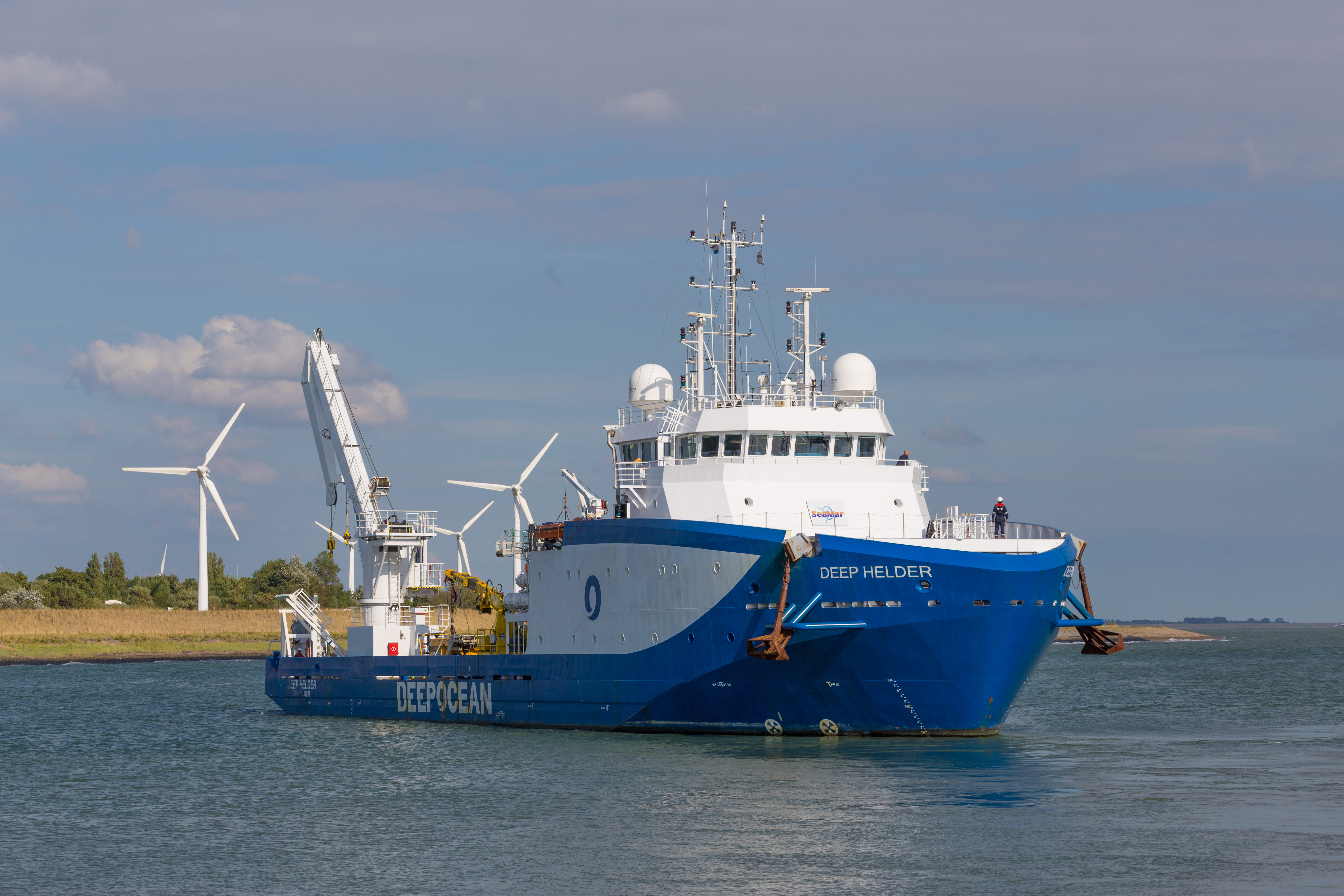
LPMS provided project controls and project management support for the Borssele cable-route identification and clearance campaign. The work included weekly progress and financial reporting, production-rate analysis, schedule and remaining-scope forecasting, subcontractor and marine-spread coordination, commercial follow-up, and management of the transition from Glomar Wave to Deep Helder.
LPMS also prepared and coordinated the vessel mobilisation and demobilisation plans, including the transfer of the ROV, survey and support systems, HAZID and kick-off activities, lifting and sea-fastening interfaces, on-hire and off-hire surveys, and mobilisation readiness reporting.
01 — Project Context
The Borssele wind zone in the North Sea is one of the Netherlands' major offshore wind development areas, part of the Dutch government's phased roll-out of offshore wind capacity off the coast of Zeeland. Connecting an offshore wind farm to the onshore grid requires laying submarine export cables along a defined route between the wind farm and the landing point.
Before cable installation could proceed, a debris and unexploded ordnance (UXO) identification and clearance survey was required along the planned route. The North Sea saw extensive military activity during both World Wars, and legacy ordnance remains a recognized risk for any subsea construction work in the region, requiring specialist survey and clearance before cables, foundations, or other infrastructure can be safely installed.
Fugro, a geo-data and survey specialist, carried out the debris and UXO identification and clearance campaign on behalf of TenneT, the Dutch transmission system operator responsible for connecting offshore wind capacity to the national grid.
LPMS provided project management support on the engagement, coordinating survey execution and reporting for the debris and UXO identification and clearance work along the cable route ahead of installation.
02 — Execution Constraints
03 — LPMS Approach
04 — Outcomes